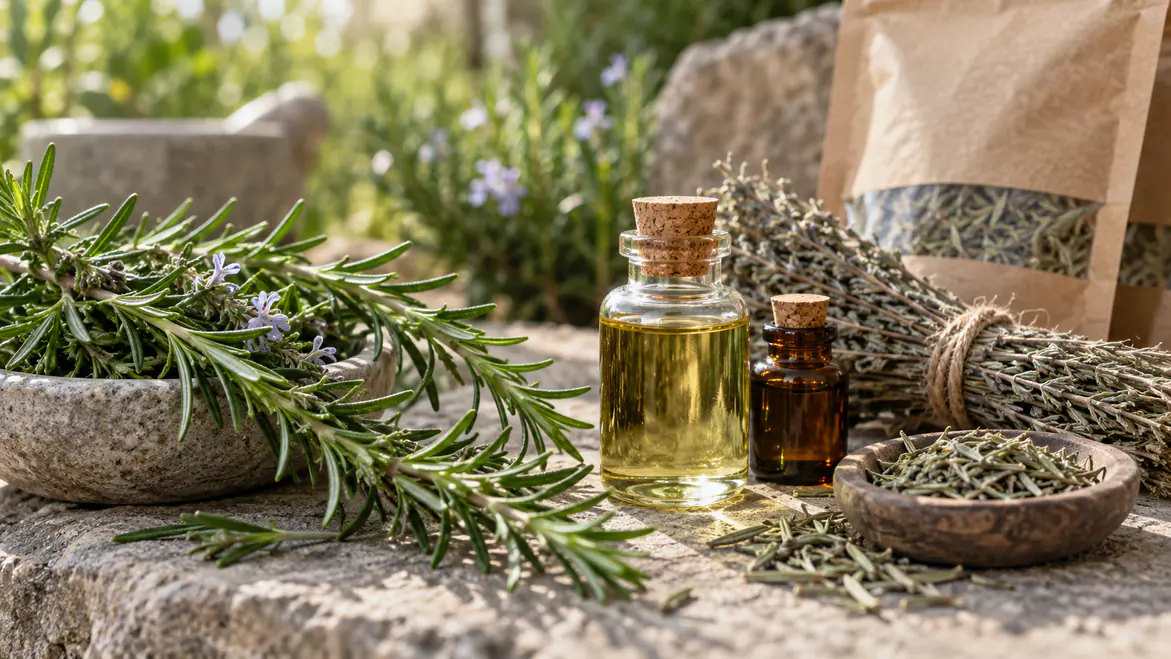
Coriander, mint, basil and, increasingly, rosemary: herbs that once came from a kitchen garden are now a fast-growing market. In India, that market is projected to almost double by the end of the decade.
- Market in 2024
- $542M
- Projected 2030
- $994M
- Growth a year
- 10.6%
- Share of global
- 9.2%
The headline numbers
Grand View Research estimates India’s fresh-herbs market at US$542.0 million in 2024. It projects the market to reach US$993.5 million by 2030, a compound annual growth rate of 10.6% between 2025 and 2030. India accounted for 9.2% of the global fresh-herbs market in 2024 and is the fastest-growing country market in Asia Pacific.
Coriander dominates, with 57.8% of Indian revenue in 2024, which is no surprise given its place in everyday Indian cooking. Rosemary isn’t broken out as its own segment. It sits in the smaller “other herbs” group, alongside crops that are newer to Indian kitchens.
Why herbs are growing
Several trends are pushing demand up at once. Urban consumers are cooking more global cuisines, so herbs like basil, parsley and rosemary are moving from speciality stores into everyday grocery baskets. Restaurants and packaged-food makers want fresh, traceable ingredients. And natural ingredients are in demand well beyond food, in cosmetics, hair care and wellness products.
Rosemary: more than a kitchen herb
Rosemary is unusual because it sells into several markets at once:
- Fresh and dried leaf for kitchens, restaurants and food processors.
- Essential oil for fragrance, aromatherapy and personal care. Rosemary oil has become a popular hair-care ingredient.
- Rosemary extract, used as a natural antioxidant and preservative in food.
Published forecasts for these rosemary products are global rather than India-specific, and they vary. Estimates for rosemary extract and rosemary oil mostly fall between about 7% and 8% growth a year to the end of the decade. One report, for example, projects the global rosemary-extract market to reach US$1.72 billion in 2030, growing at 7.3% a year. Our own investor deck uses a 7.6% growth rate for rosemary, which sits inside that range. We haven’t found a public India-only rosemary forecast, and we’d rather say so than cite one we can’t trace.
India also has room to grow as a supplier. It isn’t among the world’s largest rosemary producers, but commentary on the trade says Indian exporters are building a bigger role in dried herbs and natural extracts for markets such as Europe.
The Himalayan advantage
Rosemary is a Mediterranean shrub. It likes sun, good drainage and cool nights, and it doesn’t like waterlogged soil, which makes well-drained Himalayan slopes a natural fit. India’s scientific institutions have already backed the crop. The CSIR Institute of Himalayan Bioresource Technology has developed an agro- and processing technology package for rosemary, and CSIR’s Aroma Mission has promoted rosemary among high-value aromatic crops for mountain farmers.
Where agrivoltaics fits
For a farmer, the hard parts of a crop like rosemary are front-loaded costs and uncertain buyers. Growing it under solar panels changes that. The solar plant already provides the land, the structure and steady income, so the herb crop becomes a second income layer rather than a risky bet on its own.
At our 400 kW pilot, 5,000 rosemary plants grow under the panels today, with room for about 20,000. At an assumed 300 g per plant a year, that is about 1.5 tonnes of potential harvest now and 6 tonnes at full capacity. Our planned 2 MW block could hold 1,00,000 plants and about 30 tonnes of fresh herb. In our index model, planting all the suitable ground under the panels lifts projected profit to 183% of a solar-only plant.
What we still need to prove. These yields are potential, based on a 300 g-per-plant assumption. Our next steps are measuring realised yield and harvest cycles, and securing reliable buyers for fresh leaf, dried herb and oil.
Who we want to hear from
If you buy fresh or dried herbs, distil essential oils or make natural-ingredient products, we would like to talk about offtake from Uttarakhand’s hill-solar sites.
Sources
- Grand View Research — India Fresh Herbs Market Size & Outlook, 2025–2030: 2024 size, 2030 projection, growth rate, segment and global-share figures.
- Research and Markets — Rosemary Extract Market Report 2026: global rosemary extract, US$1.72 billion by 2030 at 7.3% a year.
- Data Bridge Market Research — Global Rosemary Oil Market: global growth estimate of about 7.8% a year.
- Commodity Board — Indian organic rosemary prices and export interest.
- India Science & Technology — CSIR-IHBT rosemary agro- and processing technology.
- The Pioneer — CSIR Aroma Mission and high-value aromatic crops, including rosemary (2019).